
Last updated November 15, 2026
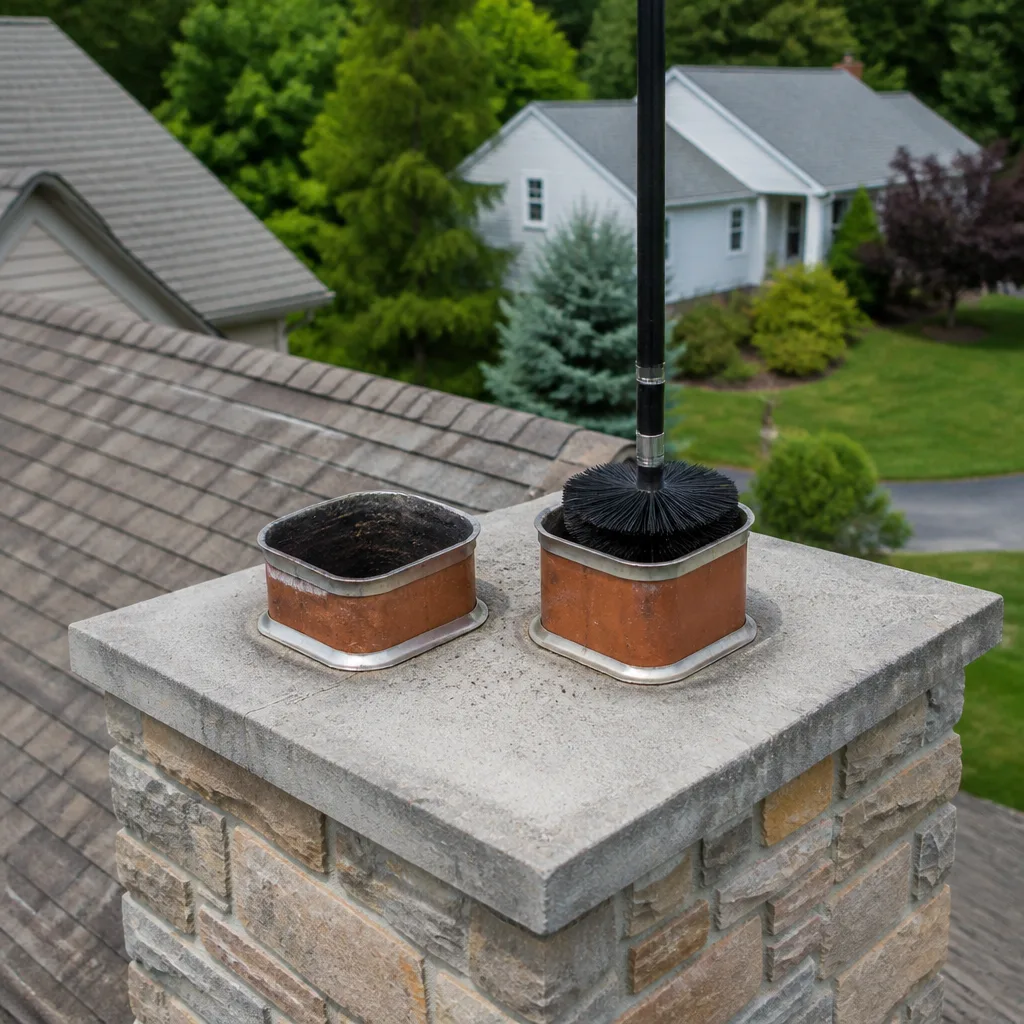 Sweep & inspection
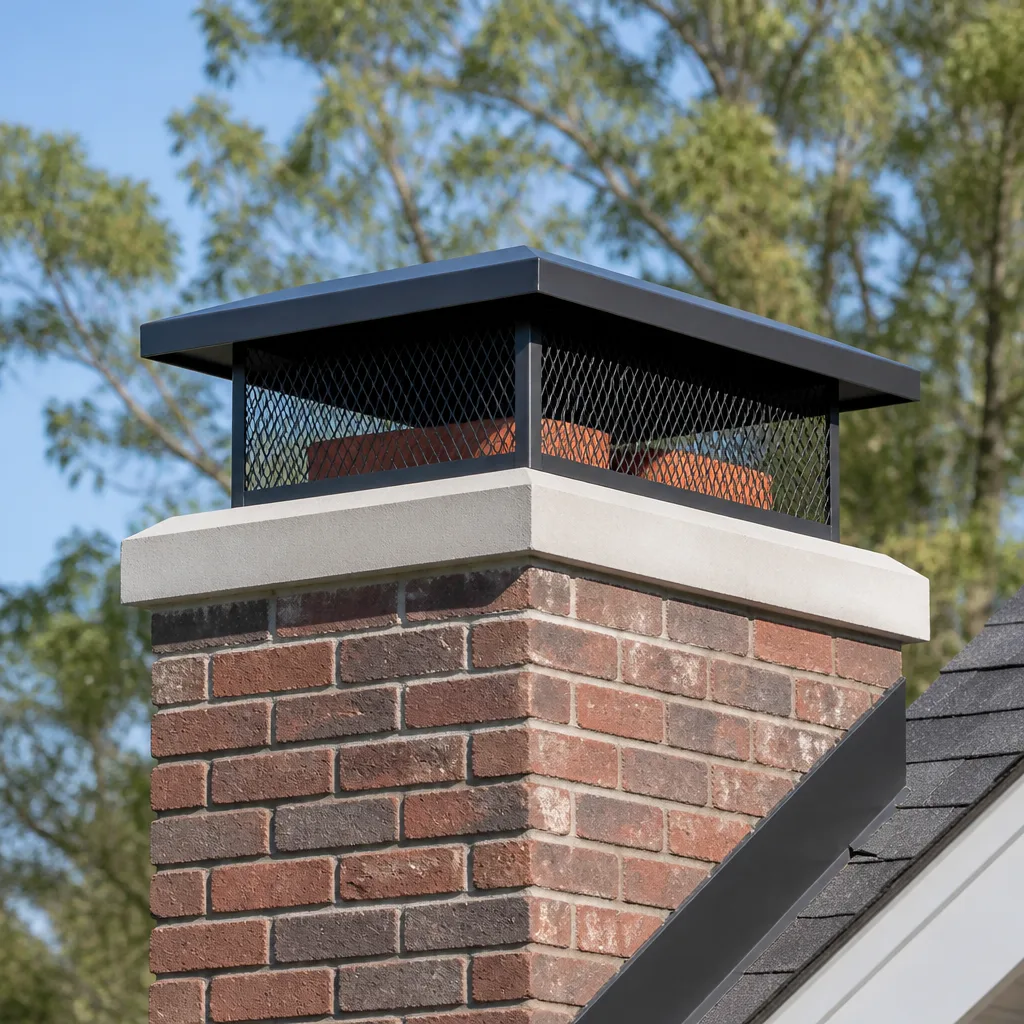 Caps & crowns
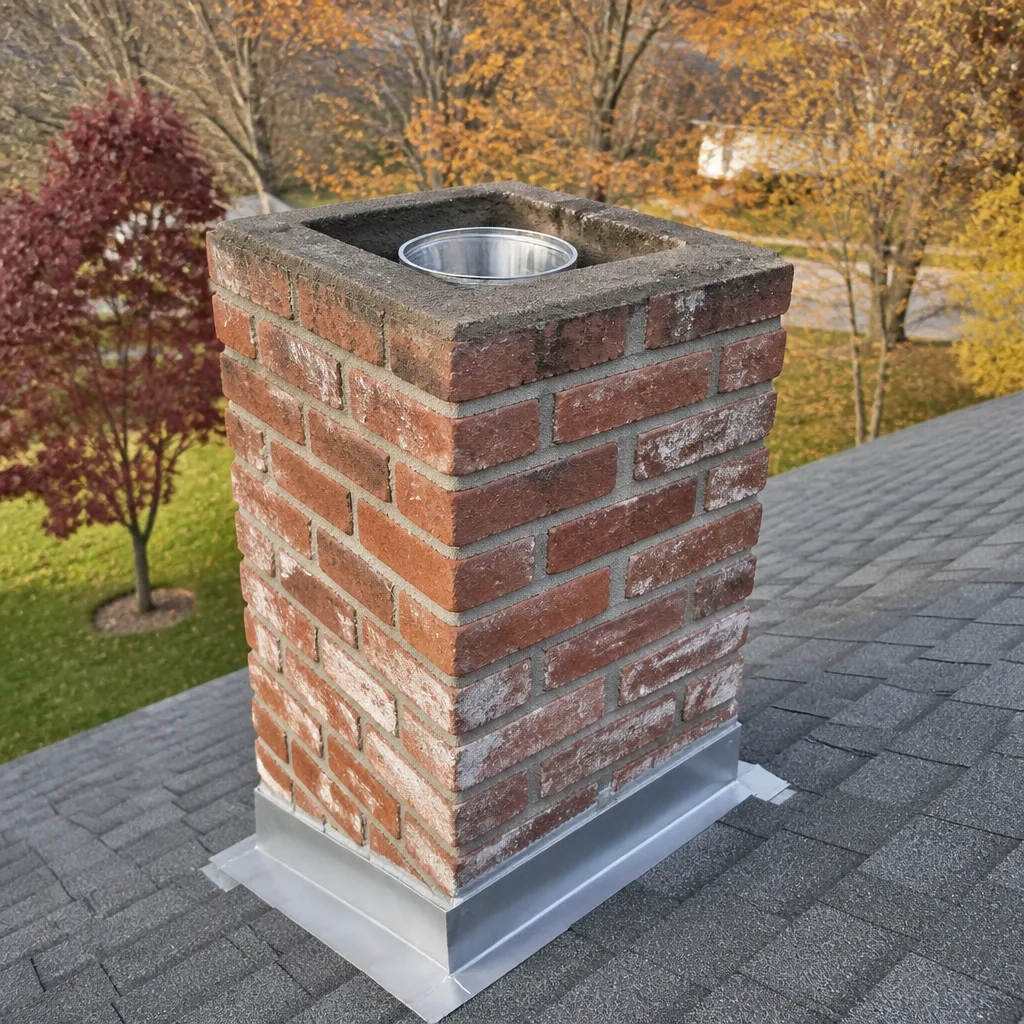 Flue relining
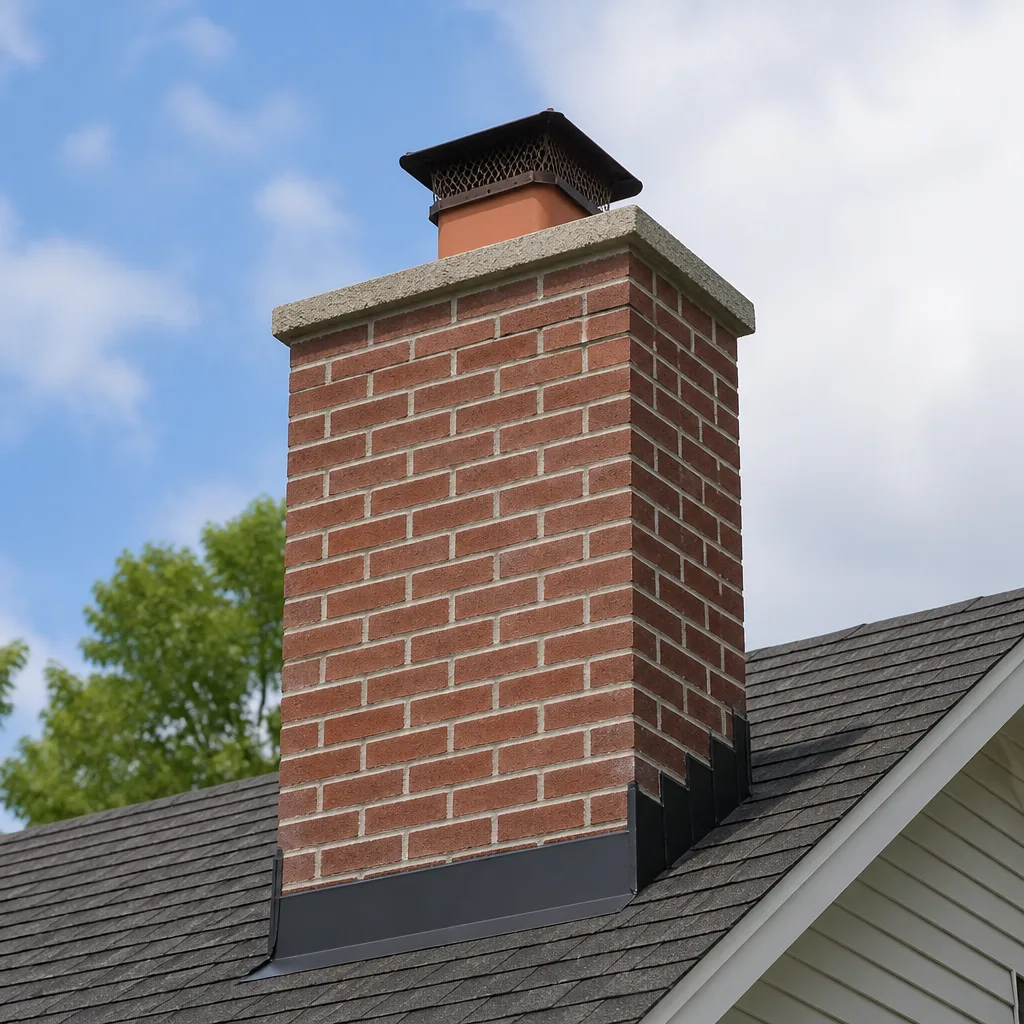 Masonry repair
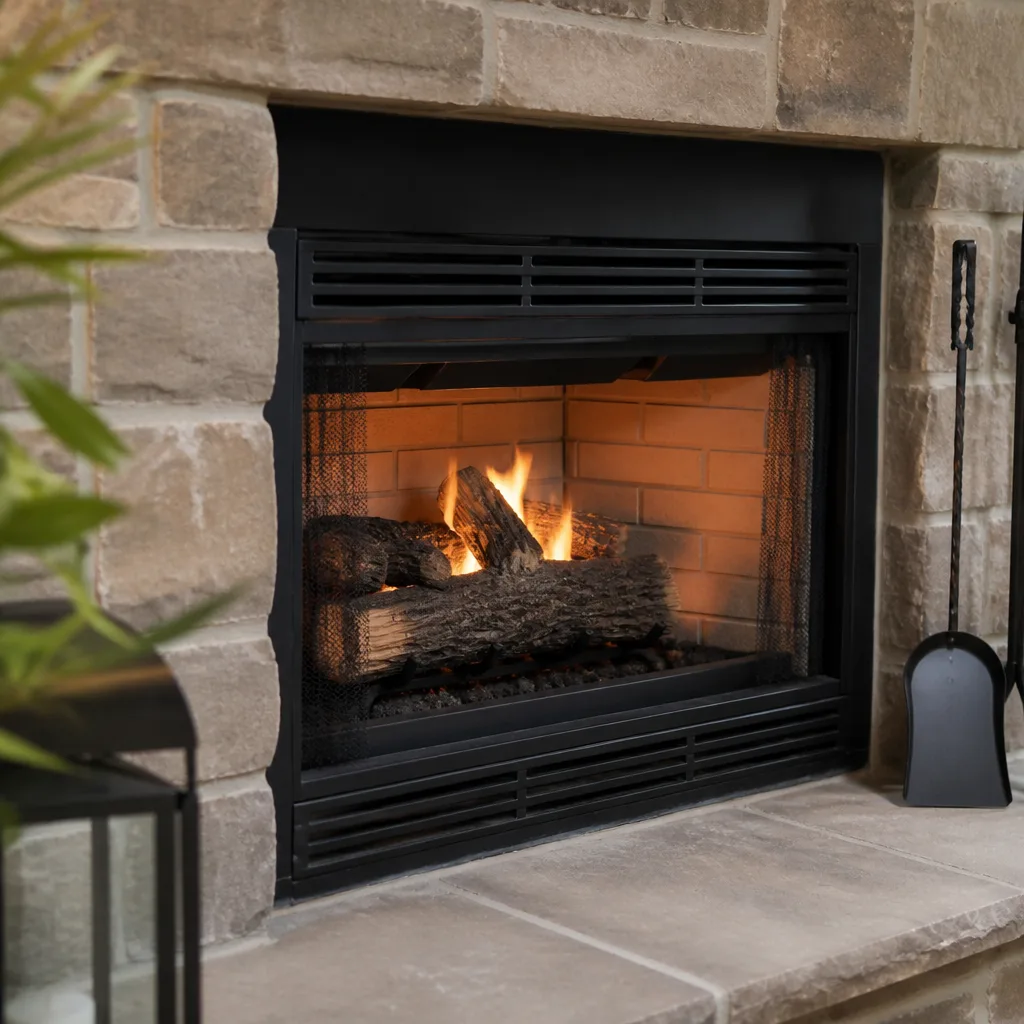 Gas fireplace service
Level 1 sweep and inspection to the NFPA 211 annual standard - flue, crown, cap, and flashing checked and photographed
Chimney sweep logs do not sweep chimneys. They loosen some creosote - which then falls where a brush and vacuum still have to collect it.
The Complete Guide to Chimney Cleaning in Thornton
Most chimney cleaning advice you’ll find online was written for a house at sea level, and it shows. At 5,351 feet, Thornton’s thin air changes how a fire burns, how much draft your flue pulls, and how fast creosote builds inside it. The low humidity and intense UV that make Colorado afternoons so bright also work on your chimney’s mortar and liner year-round, quietly weathering them faster than a coastal guide would ever warn you about. A brush-down that makes sense in a humid climate can miss the real problems a Thornton chimney develops. In this guide we’ll walk through what a proper cleaning actually covers, how elevation shapes creosote in this city, what the three inspection levels mean, and why gas fireplaces and dryer vents belong in the same maintenance conversation. By the end, you’ll know exactly what you’re paying for and how to tell a real cleaning from a quick sweep.
Quick Answer
A professional chimney cleaning in Thornton removes creosote, soot, and blockages from the flue and firebox, then finishes with a camera inspection so you can see the condition of your liner and joints for yourself. It’s recommended at least once a year for wood-burning fireplaces, and annually for gas inserts and dryer vents too. The job is complete when the flue is clear, the appliance is checked, and any repair the sweep uncovers is either handled or documented with photos.
Styles & brands we work with
- Sweep & inspection
- Caps & crowns
- Flue relining
- Masonry repair
- Gas fireplace service
Table of Contents
- Why chimney cleaning in Thornton is different from what you’ve read online
- How elevation and dry air shape creosote and draft
- The three inspection levels and when each applies
- What a full cleaning covers, from flue to firebox
- What professional equipment finds that a brush kit misses
- Why gas fireplaces and inserts still need annual cleaning
- Flue sizing, BTU output, and incomplete combustion
- Dryer vent cleaning and the venting picture
Why chimney cleaning in Thornton is different from what you’ve read online
Thornton sits high on the Front Range, and that single fact reshapes everything about your chimney’s behavior. Guides written at sea level assume denser air, higher humidity, and milder temperature swings. None of that holds here. The air is thinner, the humidity routinely drops into single digits, and a spring afternoon can swing forty degrees between dawn and mid-day. Each of those differences shows up inside your flue.
Thinner air means a fire has less oxygen per cubic foot to work with, so combustion behaves differently than it does at lower elevations. Homeowners often compensate by running a fire hotter or loading more wood, which can push creosote to a harder, glazed stage faster than they expect. The dry climate means the wood you buy locally, if it hasn’t been properly seasoned, can look ready and still carry hidden moisture, and that moisture feeds creosote. And the freeze-thaw cycling we get across the Front Range works on masonry mortar and crown material in a way a humid coastal climate never does.
We’re not saying Thornton chimneys are uniquely fragile. We’re saying the cleaning and inspection have to account for these conditions, and most generic checklists don’t. A proper sweep in Thornton looks at creosote stage, not just quantity. It checks joint integrity in a climate that stresses those joints. And it treats the appliance and venting as one system, because in a city this dry, small gaps and cracks get no help from ambient moisture.
How elevation and dry air shape creosote and draft
Creosote forms in three recognizable stages, and where yours lands matters more than how thick the layer is. Stage one is a soft, flaky soot you can brush away easily. Stage two is a crusty, flaky deposit that needs more work. Stage three is glazed, hard, and stubborn, and it’s the stage that poses real fire risk. In our experience around Thornton, the combination of thin air and hot-burning fires pushes some homes toward stage two and three faster than the homeowner anticipates.
Draft is the other half of the story. A chimney works because warm exhaust rises and pulls fresh air in behind it. At 5,351 feet, the pressure difference that drives that draft is smaller, so a chimney that would draw fine at sea level can struggle here. Struggling draft means smoke lingers longer in the flue, deposits more creosote, and cools before it exits. You may notice a smoky smell in the room, a fire that’s slow to catch, or smoke spilling when you first light it. Those are draft symptoms, and cleaning alone won’t fix them if the flue is undersized or the cap is blocked.
Here’s what to watch for:
- Smoky startup. A fire that smokes before it catches usually signals weak draft, often a sizing or blockage issue.
- Glazed, shiny deposits. That’s stage three creosote, and it’s a fire hazard that a standard brush pass can struggle to remove.
- Cracked mortar in the firebox or smoke chamber. Dry air and temperature swings accelerate this, and cracks let gases escape into the structure.
- A cap or spark arrestor packed with debris. In a dry, windy climate, debris in the cap is a common cause of poor draft.
When these show up, the right move is a professional look, not more wood on the fire. For general service questions, Chimney Sweep Thornton is the place to start.
The three inspection levels and when each applies
Most cleaning quotes say “inspection included” without telling you which level. That’s a meaningful gap, because the three levels cover very different ground. Knowing them lets you ask the right question before anyone climbs on your roof.
- Level 1 inspection. A visual check of the readily accessible parts of the chimney and venting: the firebox, damper, flue from the top and bottom, and the appliance connection. It applies when your appliance hasn’t changed and you’ve had regular maintenance. This is what comes with a routine annual cleaning.
- Level 2 inspection. Everything in Level 1 plus a video scan of the flue interior, and access to parts of the chimney that a visual check can’t reach. It applies after a chimney fire, a change in fuel or appliance, a property sale, or any time you’re unsure of the chimney’s history. In our experience, a Thornton home that’s changed hands or switched appliances should get a Level 2 before the next burn season.
- Level 3 inspection. The most involved level. It applies when a Level 2 turns up a problem that requires opening access to part of the chimney or adjacent structure to diagnose. It’s rare, and it’s only warranted when there’s a specific concern to investigate.
Here’s the practical difference: a Level 1 tells you the flue looks clear. A Level 2 shows you the inside of the liner, the condition of the joints, and whether the flue is sized correctly for your appliance. That last part matters in Thornton, where thin air and variable draft make correct sizing more important than it is at lower elevations. If you’re buying a home here or you’ve never had the flue scanned, ask for the video.
What a full cleaning covers, from flue to firebox
A complete cleaning is a sequence, not a single pass with a brush. Each step exists because the one before it can reveal something the next needs to account for. Here’s the order a proper job follows.
- Protect the room. Drop cloths and a containment setup go down before any equipment comes in. Soot travels; a clean room afterward is part of the job.
- Inspect first. The technician checks the firebox, damper, smoke chamber, and flue before cleaning, so nothing gets brushed into a problem area.
- Clean the flue. Rotary equipment or the appropriate brush for the flue’s material removes soot and creosote top to bottom.
- Clean the firebox and smoke chamber. These collect their own soot and need their own attention.
- Vacuum with a HEPA system. A high-efficiency vacuum keeps fine dust out of your living space.
- Scan and document. A camera pass shows the liner condition, and you get photos so the findings are verifiable.
- Report and repair. Anything found gets explained, and repair-capable work gets handled without a second contractor.
That last step is where full-scope service matters. When a sweep uncovers a cracked crown or a deteriorating flue, the fix can be specified right then. At Chimney Sweep Thornton, we use DuraFlex liner systems and HeatShield resurfacing for exactly this reason: repair gets chosen by what the flue needs, not by what’s cheapest to source. Brands like Olympia Chimney and Famco round out the materials we work with, which are the kinds of professional-grade products certified chimney specialists rely on across the industry. When problems are found during your sweep, they get addressed before we leave.
What professional equipment finds that a brush kit misses
The brush-and-rod kit in the garage has its place, but it’s a one-tool solution to a multi-part problem. Professional equipment doesn’t just clean better; it sees things. The difference is the camera.
- Rotary cleaning systems adapt to the flue’s shape and material, so they reach corners and offsets a stiff brush skips.
- Video scanning shows the interior of the liner, the joints, and the smoke chamber, which no brush can inspect from the outside.
- HEPA vacuums capture the fine dust that otherwise ends up on your furniture.
- Creosote-stage assessment tells the technician whether a standard brush pass will work or whether a chemical treatment is needed first.
In a dry climate like Thornton’s, small cracks in mortar and liner joints are easy to miss from the roof and impossible to see from the living room. A video scan catches them while they’re still small enough to resurface. That’s the whole point of an inspection: to find the problem before it becomes a repair. A brush kit cleans what it can reach and leaves you guessing about the rest.
Why gas fireplaces and inserts still need annual cleaning
Gas fireplaces don’t produce the visible soot a wood fire does, so it’s tempting to skip them. Don’t. Gas appliances still generate combustion byproducts, and venting those safely is a yearly concern. The burners and logs also collect dust and debris, which can affect how the flame burns and what comes out the vent. In a dry, dusty Front Range climate, that accumulation is steady.
What a gas cleaning covers:
- Burner and log cleaning. Dust and debris on the burners can alter the flame and combustion.
- Venting check. The flue or vent connector is checked for blockages and proper draft.
- Flue interior scan. Even gas appliances benefit from a look inside the liner, especially in dry climates where joints weather.
- Carbon monoxide awareness. A properly vented gas appliance keeps combustion gases going up and out. A blocked or damaged vent can let them back into the home, which is why the annual check matters.
We treat gas fireplace cleaning as part of the same annual rhythm as wood. It’s a short visit and it closes a gap most homeowners don’t think about. Our technicians have up to 10 years of experience, and they handle the inspection the same way they’d handle a wood flue: look first, report honestly, and repair only what the evidence supports.
Flue sizing, BTU output, and incomplete combustion
Flue sizing is the most overlooked variable in chimney performance, and it drives creosote buildup in Thornton homes in ways most cleaning articles never mention. A flue that’s too large for its appliance lets exhaust rise too slowly and cool too much, which leaves more creosote behind. A flue that’s too small chokes the appliance, producing incomplete combustion and more unburned fuel in the smoke. Either way, the result is more deposits and more risk.
How does this happen? A homeowner swaps in a higher-BTU insert without checking whether the existing flue matches, or a builder sized the flue for a different appliance than the one now in the fireplace. The connection between the appliance’s BTU output and the flue’s cross-section is what determines whether combustion completes cleanly. When it’s off, you get a fire that looks fine but deposits more than it should.
What a professional looks at:
- Appliance rating. The input BTU rating of the insert or fireplace, which should be matched to the flue.
- Flue cross-section and height. Together these determine the draft the appliance can actually generate.
- Connector condition. A short or poorly seated connector can starve draft even when the flue is right.
- Signs of incomplete combustion. Creosote stage, smoke patterns, and flame quality all point to whether sizing is the issue.
If your sweep turns up heavy creosote despite regular burning, sizing is worth checking. It’s the kind of thing a Level 2 inspection catches, and it’s cheaper to correct than a premature reline. Our chimney sweep service includes that assessment as part of the visit.
Dryer vent cleaning and the venting picture
A chimney is one venting system in your home. The dryer vent is another, and it’s the one most homeowners never think about. Lint accumulates inside dryer ducts, and restricted airflow is a real fire risk as well as a reason your dryer runs long and hot. Chimney sweeps who only handle flues miss it entirely, which is why we treat dryer vent cleaning as a dedicated service rather than an add-on.
Yearly dryer vent cleaning clears lint from the length of the duct, checks the exterior vent for proper operation, and confirms the run isn’t crushed or restricted behind the appliance. In a dry climate, a clogged dryer vent is also a heat and efficiency issue: the appliance works harder and your clothes take longer. Pairing the dryer vent visit with the chimney cleaning means both venting systems get checked on a single schedule, which is easier to keep up with than two separate appointments. If you’re in the market for a guide to the whole city, our Thornton page has an overview.
Common Mistakes to Avoid
- Assuming a cleaning is a thorough inspection. A brush-down without a camera scan only proves the flue was brushed. Ask for the video so you can see the liner.
- Skipping the cleaning because the fire looked clean. Stage two and three creosote doesn’t show from the living room. The flue interior is where the risk hides.
- Burning wet or unseasoned wood. In Thornton’s dry climate, wood can look ready and still hold moisture. Moisture feeds creosote, so check it before you burn it.
- Ignoring draft symptoms. Smoke spill and slow starts point to sizing or blockage issues that a cleaning alone won’t solve.
- Not having the flue scanned after a change. New appliances, a property purchase, or a first burn after years off all warrant a Level 2.
- Forgetting the dryer vent. It’s the second venting system in the house and one most people never inspect.
- Accepting a quoted liner or masonry repair with no evidence. You shouldn’t buy a repair you can’t verify. Ask to see the camera photos.
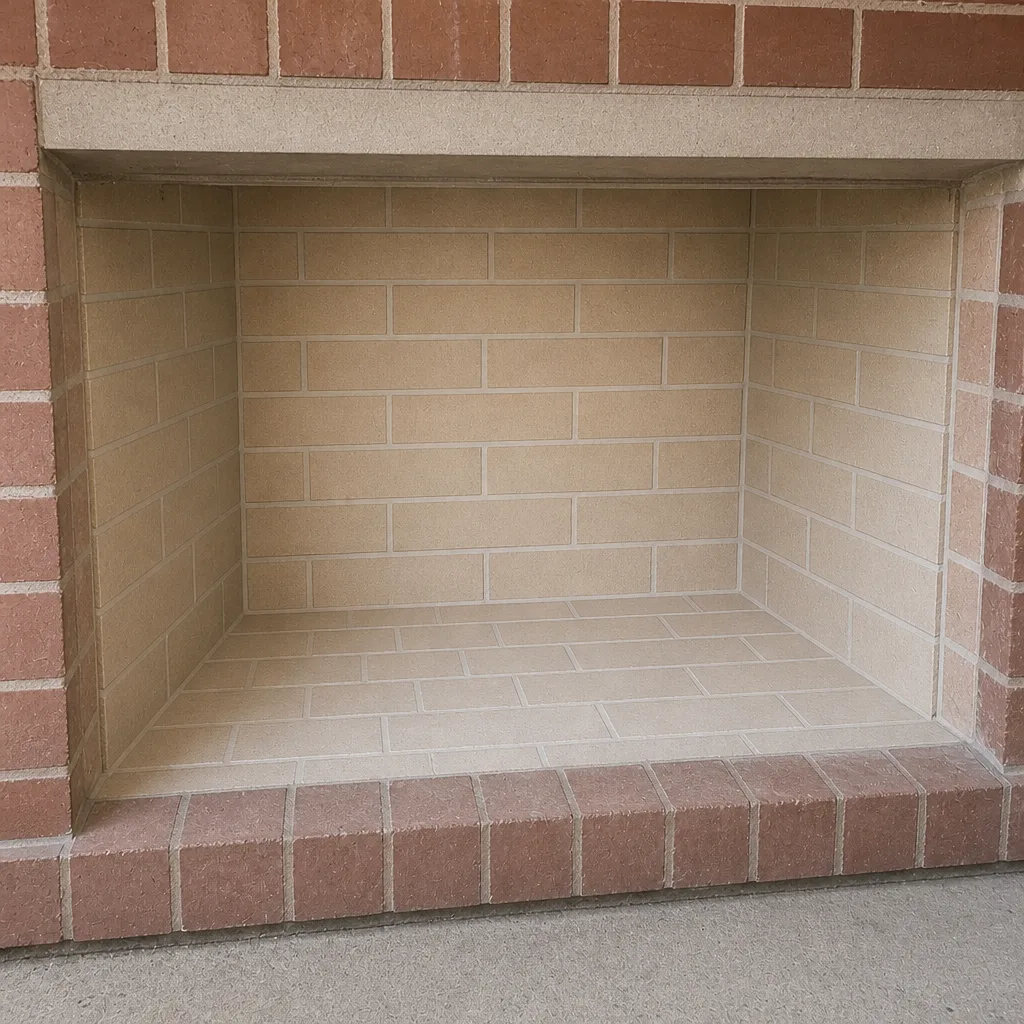
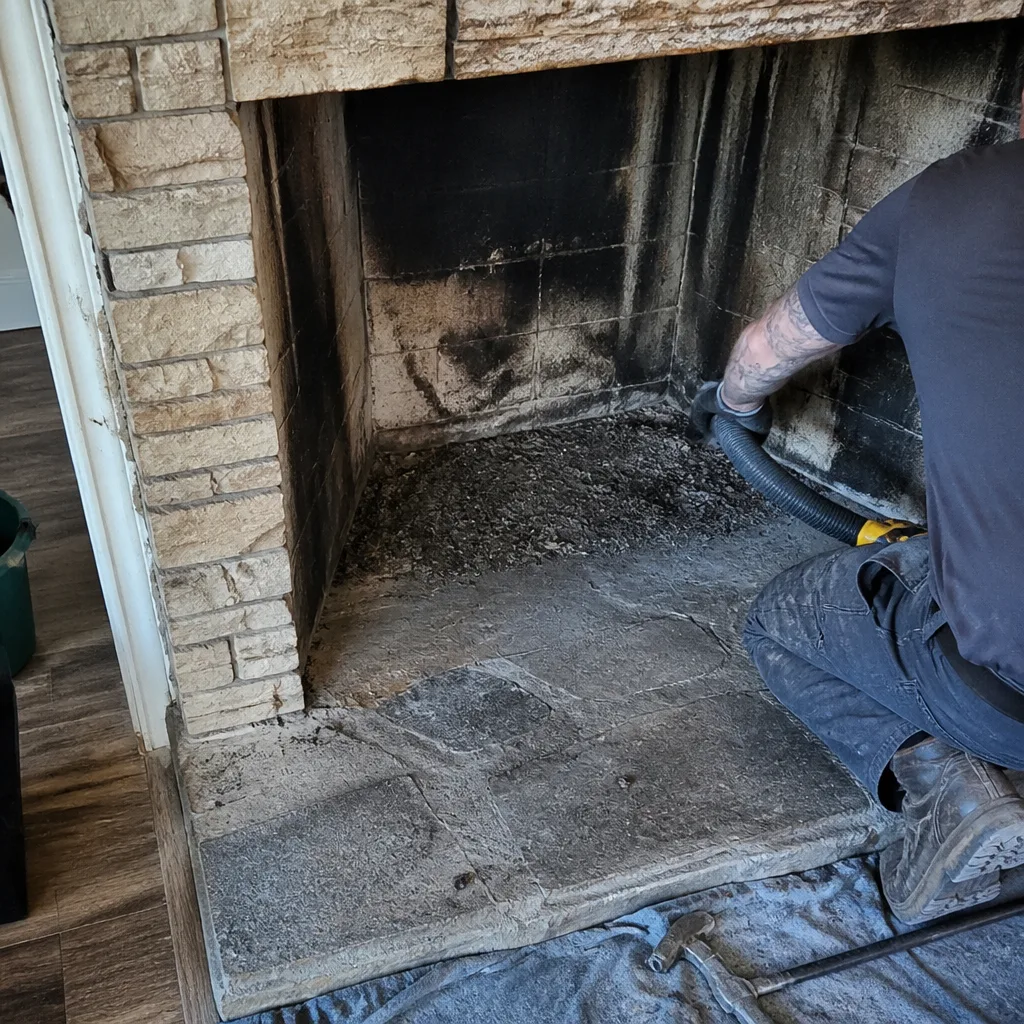
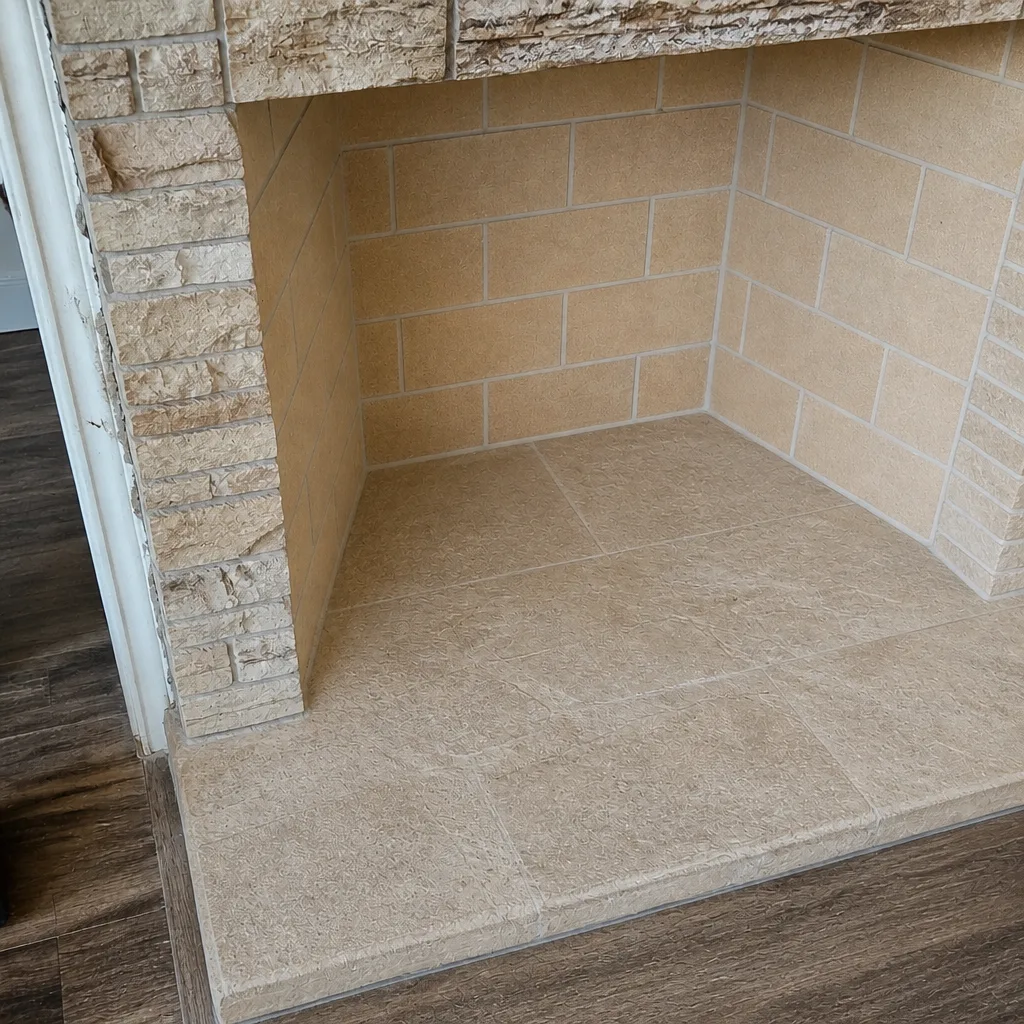
See the difference
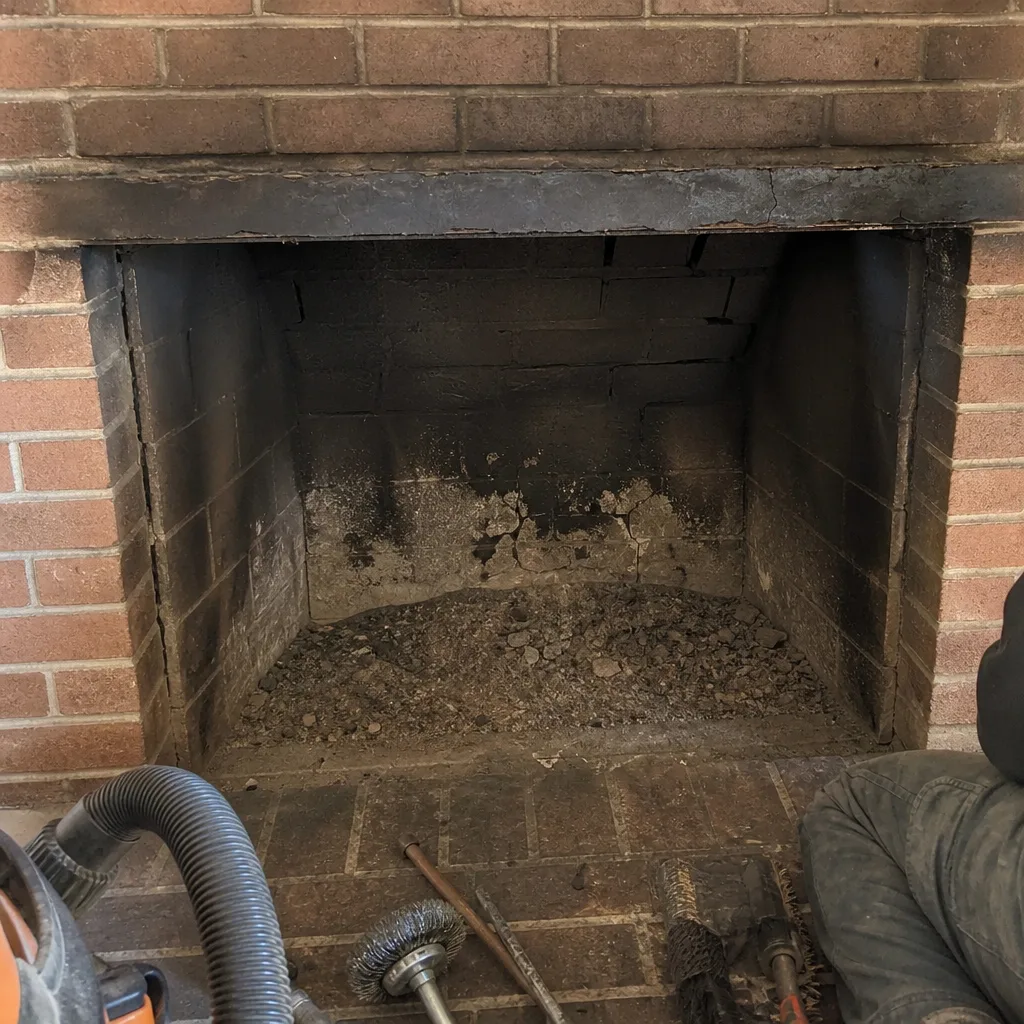 Before
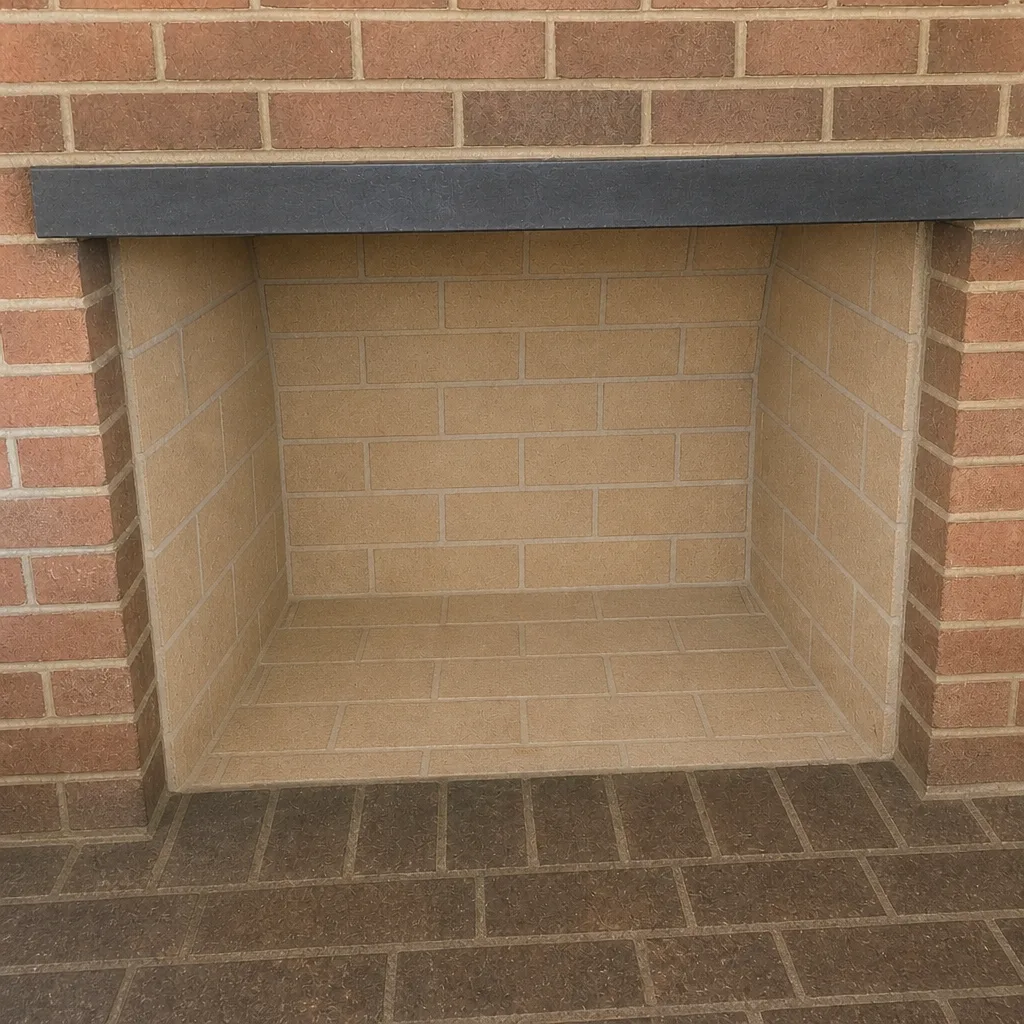 After
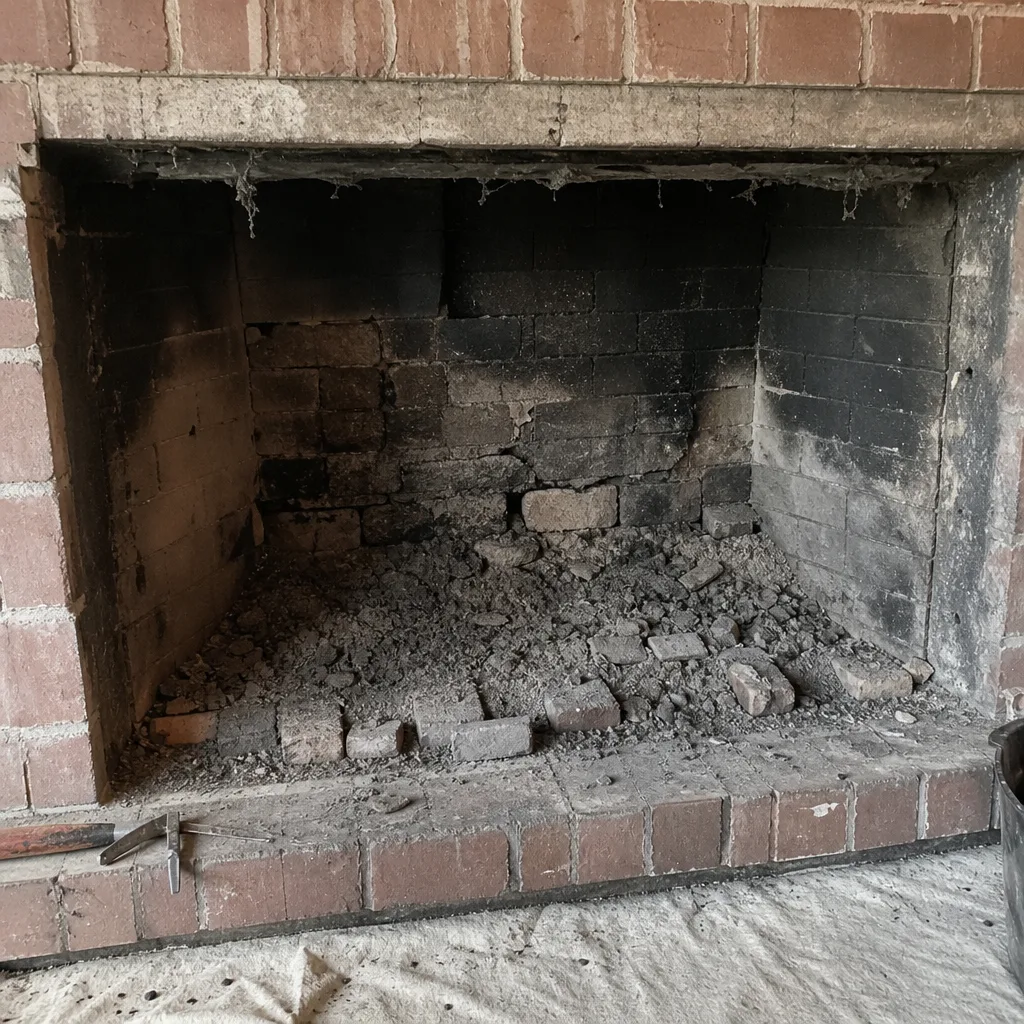 Before
 After
 Before
 After
When to Call a Professional
Call when it’s been more than a year since the last cleaning, when you’ve just moved in and don’t know the chimney’s history, or when you’ve switched from wood to gas or added an insert. Call right away if you notice smoke backing into the room, a strong creosote smell, cracked masonry in the firebox, or a cap that’s packed with debris. Same-day service is available. High-tension components like liners and dampers, and any work above the roofline, are for trained technicians; don’t climb up to investigate yourself. Chimney Sweep Thornton offers free estimates in Thornton, and the price is set per job by the written estimate. Call (866) 361-5660. We answer 24/7. Fast dispatch from 7am to 7pm, Sunday through Friday.
Frequently Asked Questions
Most cleaning and inspection visits are quoted per job after the technician sees the flue and the appliance, and you’ll get a written estimate before any work begins. Because the job is priced against what your chimney actually needs, the estimate is the honest answer rather than a phone-quoted number. Call (866) 361-5660 for an exact quote – estimates are free.
Only if the camera shows the liner is failing. You’ll see the video yourself, and nothing is recommended without evidence you can view. A small crack may be a resurface job with HeatShield rather than a full reline, and sometimes the finding can safely wait. Call (866) 361-5660 and we’ll show you what the scan found before anything is decided.
Once a year for wood-burning fireplaces, and once a year for gas inserts and dryer vents as well. Thornton’s dry climate and temperature swings accelerate wear on mortar and joints, which is one more reason not to stretch the interval. If you burn heavily through the season, ask the technician whether your creosote stage calls for a shorter interval. Call (866) 361-5660 to book a sweep.
Creosote builds up in layers, and glazed stage three deposits are the ones that can ignite. Skipped cleanings also let small cracks and blocked caps go unchecked. None of that requires a scare to be worth acting on: the flue is simply a part of the house that needs an annual look. Call (866) 361-5660 for a free estimate.
Yes, because elevation changes draft and combustion. At 5,351 feet, thinner air means less draft and fires that can burn hotter or deposit creosote faster, and the dry climate stresses mortar and liner joints year-round. A cleaning and inspection here should account for all three. Call (866) 361-5660 to book with a specialist who works in this climate.
They do. Gas fireplaces still produce combustion byproducts that need proper venting, and the burners and logs collect dust that affects combustion. An annual check covers the burners, the venting, and a flue scan, and it’s the safest way to stay ahead of venting problems. Call (866) 361-5660 for an appointment.
The Bottom Line
Chimney cleaning in Thornton is a climate-specific job, not a generic brush-down. Elevation at 5,351 feet changes draft and combustion, the dry air accelerates wear on mortar and joints, and the same conditions push creosote toward harder stages. A proper cleaning covers the flue, firebox, and smoke chamber, comes with a camera scan you can review, and connects what’s found to a repair decision backed by material performance, not guesswork. Gas inserts and dryer vents belong on the same annual schedule. When you know the inspection levels and what each one shows, you can tell a real cleaning from a quick sweep. And when something needs repair, you should be able to see the evidence before you approve the work.
Ready to get your chimney checked? Call (866) 361-5660 for a free estimate. We answer 24/7. Fast dispatch from 7am to 7pm, Sunday through Friday. Chimney Sweep Thornton handles cleaning, repair, and dryer vent service as one specialist scope, so the sweep and any fix don’t require a second contractor.
Written by the team at Chimney Sweep Thornton.